
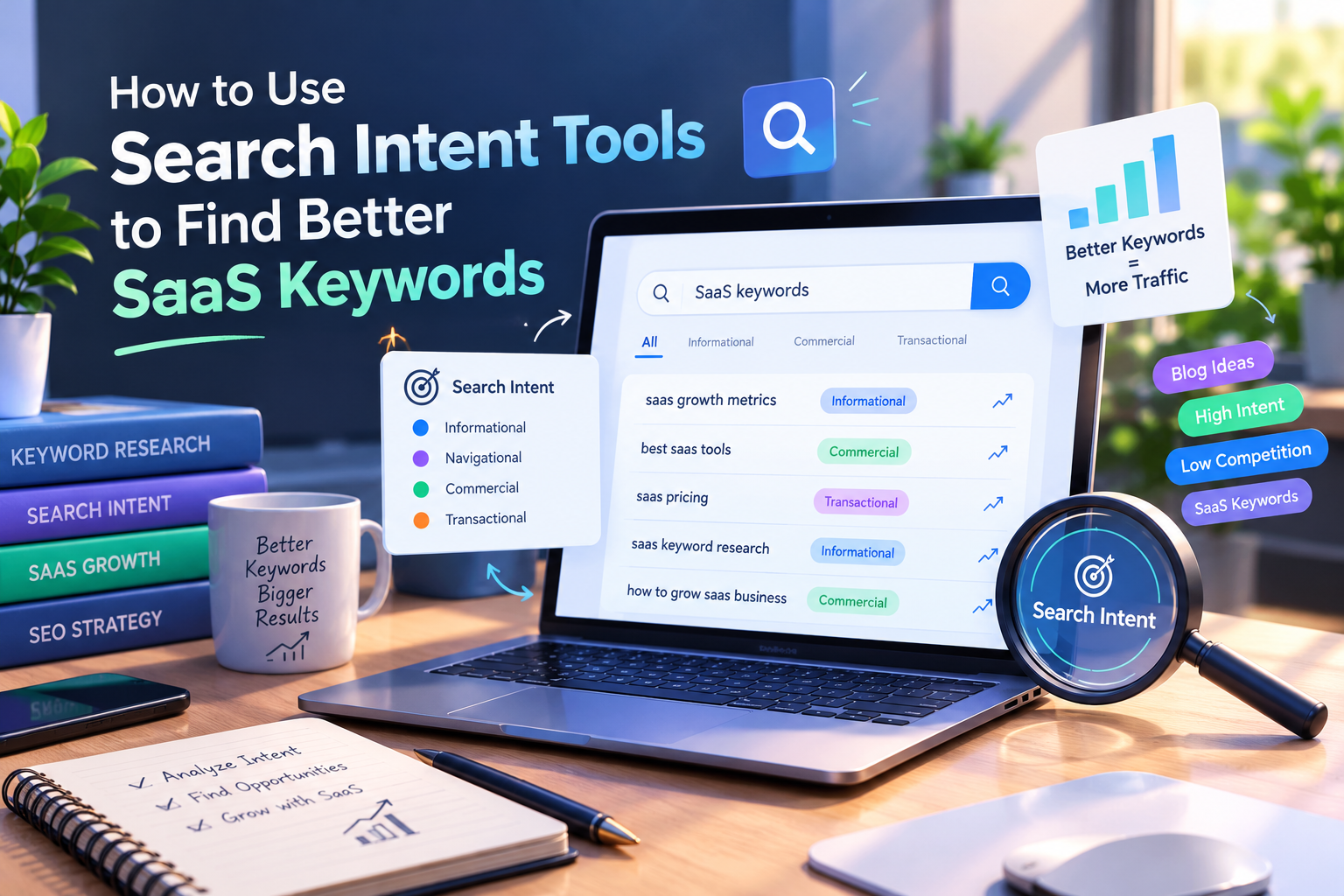

Finding the right keywords is one of the most important steps in building a successful SaaS SEO strategy. However, choosing keywords based only on search volume, keyword difficulty, or competition is not enough. To attract the right audience, SaaS companies need to understand what users actually want when they search for information, software solutions, or specific products. This is where search intent tools become valuable.
Search intent tools help marketers identify the purpose behind a search query and discover keywords that match users’ needs at different stages of the buying journey. By understanding whether someone wants to learn about a topic, compare software products, evaluate pricing, or purchase a solution, businesses can create more relevant content that attracts qualified visitors.
For SaaS companies, this approach is especially important because potential customers often research several solutions before making a decision. Using search intent tools can help businesses discover better SaaS keywords, improve content relevance, target high-value searches, and build a stronger organic search presence.
In this guide, you will learn what search intent tools are, how they work, how to use them for SaaS keyword research, and how to turn search intent insights into a practical SEO strategy.
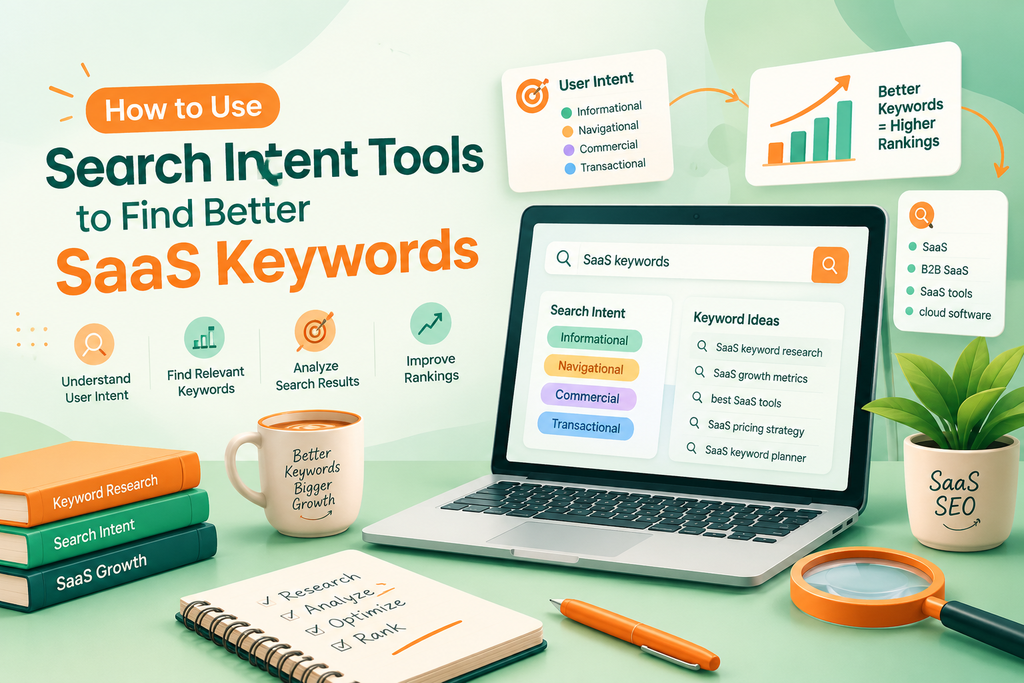
What Are Search Intent Tools?
Search intent tools are SEO research tools that help marketers understand the purpose behind users’ search queries. Instead of focusing only on the words people type into search engines, these tools help identify what users expect to find when they perform a search.
For example, a user searching for “what is customer churn” probably wants an educational explanation. Someone searching for “best customer churn software” is more likely to compare available solutions. A search for “customer churn software pricing” suggests that the user is evaluating costs before making a purchase decision.
These searches relate to the same topic, but their intent is different. Search intent tools help marketers recognize these differences and choose suitable keywords for specific pages and content formats.
Common search intent research features include keyword suggestions, search results analysis, competitor content analysis, keyword clustering, and SERP feature identification. Some tools also provide estimates of search volume, keyword difficulty, and commercial value.
For SaaS businesses, combining these insights makes it easier to identify keywords that attract relevant audiences rather than generating traffic that is unlikely to convert.
Why Search Intent Matters for SaaS Keyword Research
SaaS SEO requires more than attracting visitors to a website. The goal is to reach people who are likely to benefit from a software product and move them toward meaningful actions, such as signing up for a free trial, booking a demo, or purchasing a subscription.
Search intent helps connect keyword research with these business goals.
1. Attract More Relevant Website Visitors
When keywords match the user’s actual needs, the resulting content becomes more useful. For example, an article targeting “how to calculate monthly recurring revenue” should explain the calculation process rather than immediately promoting a subscription plan.
This relevance helps visitors find the information they expect and gives SaaS businesses an opportunity to introduce related tools naturally.
2. Discover Keywords With Commercial Potential
Some keywords indicate that users are actively researching software solutions. Searches such as “best SaaS analytics tools,” “CRM software for small businesses,” and “marketing automation platform comparison” can reveal potential buyers.
Although these keywords do not guarantee conversions, they can help businesses identify audiences with stronger product-related intent.
3. Create Content for Every Stage of the Buying Journey
Potential SaaS customers rarely make a decision after a single search. They may first learn about a problem, explore possible solutions, compare products, and then investigate pricing.
Search intent research helps businesses develop content for each stage instead of publishing unrelated blog posts.
4. Reduce Keyword Targeting Mistakes
A keyword might appear valuable because it has substantial search volume, but the search results may favor a completely different type of page than the one you intend to create.
Understanding intent helps you determine whether a keyword is suitable for a blog post, product page, comparison article, calculator, or landing page.
The Four Main Types of Search Intent
Before using search intent tools, it is important to understand the four common categories of search intent.
1. Informational Intent
Informational intent means that users want to learn something, understand a problem, or find an answer.
Examples include:
- What is SaaS customer retention?
- How to calculate customer acquisition cost
- What is monthly recurring revenue?
- How does marketing automation work?
These searches are suitable for educational blog posts, tutorials, guides, glossaries, and informational resources.
For SaaS websites, informational keywords help build topical authority and introduce potential customers to relevant concepts before they are ready to purchase.
2. Navigational Intent
Navigational intent occurs when users want to reach a particular website, product, or online destination.
Examples include:
- HubSpot login
- Salesforce pricing page
- Ahrefs keyword explorer
- Semrush dashboard
These searches usually involve a specific brand or destination. SaaS businesses can optimize their own brand pages and ensure important product resources are easy to find, but generic navigational keywords may not be appropriate targets for every company.
3. Commercial Investigation Intent
Commercial investigation intent describes users who are researching options before making a purchase.
Examples include:
- Best SaaS SEO tools
- Top CRM software for B2B companies
- Ahrefs vs. Semrush
- Best analytics platforms for startups
These keywords are useful for comparison articles, product roundups, alternatives pages, and detailed software reviews.
Content targeting commercial investigation intent should provide clear comparisons, explain relevant features, and help readers evaluate their options.
4. Transactional Intent
Transactional intent indicates that users want to take an action, such as purchasing software, starting a trial, or subscribing to a service.
Examples include:
- Buy project management software
- SaaS analytics software free trial
- CRM software pricing plans
- Subscribe to email marketing software
These keywords are often suitable for product pages, pricing pages, signup pages, and conversion-focused landing pages.
The exact intent of a query can vary, so marketers should examine the search results instead of classifying every keyword by its wording alone.
Best Search Intent Tools for Finding SaaS Keywords
Several SEO tools can help SaaS marketers identify search intent and improve keyword research. Each platform offers different features, so the best choice depends on your budget, experience, and research requirements.
1. Semrush
Semrush is an SEO research platform that offers keyword research, competitor analysis, and search intent information for supported queries.
SaaS marketers can use its Keyword Overview and Keyword Magic Tool to discover related search terms, review keyword metrics, and explore opportunities connected to their software niche.
For example, a company selling SaaS analytics software could investigate keywords related to revenue dashboards, customer retention, product analytics, and reporting automation.
The platform can help identify keyword variations and provide estimates of search demand and competition. These estimates should be treated as research indicators rather than guaranteed traffic results.
2. Ahrefs
Ahrefs is useful for keyword discovery, competitor research, and understanding the search results associated with target queries.
Its Keywords Explorer and SERP analysis features can help marketers evaluate keyword difficulty, search demand, competing pages, and related keyword opportunities.
For example, a B2B SaaS company could examine the keyword “best customer success software” to discover competing articles and identify additional software categories or comparison terms worth researching.
Ahrefs can be especially helpful when evaluating how competing websites attract organic traffic and which pages perform well for related topics.
3. Google Search
Google Search is one of the simplest ways to investigate search intent without purchasing an SEO subscription.
Enter a target keyword and examine the pages that appear near the top of the results. Observe whether Google primarily displays educational articles, product pages, comparison content, videos, or other formats.
You can also review autocomplete suggestions, the People Also Ask section when available, and related searches to discover additional questions and keyword variations.
For example, searching for “SaaS churn calculator” may reveal whether users expect a practical calculator, an explanatory guide, or a combination of both.
4. Google Keyword Planner
Google Keyword Planner is primarily designed for keyword research and advertising planning. It can help users discover keyword ideas and examine estimated search ranges and advertising competition, depending on their account and available data.
Although it does not replace a dedicated search intent analysis workflow, it can help SaaS marketers evaluate the demand behind relevant commercial and informational queries.
Combine its keyword suggestions with manual SERP analysis to determine which terms are appropriate for organic content.
5. Google Search Console
Google Search Console is particularly valuable for SaaS websites that already receive organic impressions or clicks.
It shows the search queries associated with your website’s performance and helps you identify pages that receive impressions but attract relatively few clicks.
For example, if a SaaS blog receives impressions for “customer acquisition cost calculator,” you can examine the existing page and determine whether its content, title, or format sufficiently addresses the searcher’s needs.
Search Console does not automatically classify every query by intent, so you should interpret its performance data alongside search results analysis.
6. AnswerThePublic
AnswerThePublic helps marketers explore questions and phrases associated with a topic. These suggestions can reveal the problems, concerns, and informational needs of potential customers.
A SaaS marketer researching “project management software” might discover questions about pricing, integrations, reporting, collaboration, and team productivity.
These insights can support blog planning, FAQ sections, and educational resources. Validate suggested phrases using search results and other keyword data before prioritizing them.
How to Use Search Intent Tools Step by Step
Using search intent tools effectively requires a structured workflow.
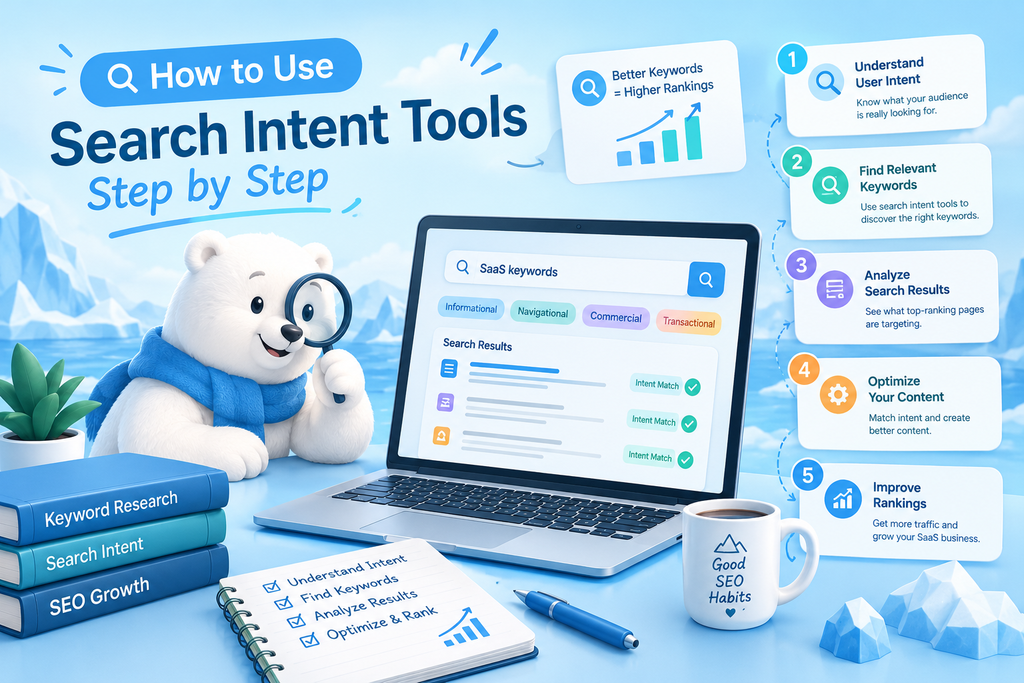
The following steps can help you turn broad SaaS topics into a practical keyword strategy.
Step 1: Define Your SaaS Niche and Target Audience
Begin by identifying your software category, ideal customers, and the problems your product solves.
For example, a B2B SaaS company providing SEO analytics software might target marketing managers, SEO professionals, agencies, and business owners.
Write down the main problems these users experience, such as measuring organic performance, identifying keyword opportunities, tracking rankings, or reporting results.
These problems will provide the foundation for your keyword research.
Step 2: Create a List of Seed Keywords
Seed keywords are broad terms that describe your product, audience, or industry.
Examples for a SaaS business include:
- SaaS SEO tools
- B2B keyword research
- Marketing analytics software
- Customer retention tools
- SaaS reporting dashboard
- Revenue metrics calculator
Enter these terms into a keyword research platform to generate related phrases, questions, and longer search queries.
Avoid selecting keywords solely because they have high search volume. Focus on relevance to your audience and the solutions your business provides.
Step 3: Analyze the Search Intent of Each Keyword
Review the intent indicators provided by your chosen tool, where available. Then search for the keyword manually and examine the actual results.
Ask yourself three questions:
- What problem is the searcher trying to solve?
- What types of pages dominate the search results?
- What information or functionality would satisfy the searcher?
Suppose you research “SaaS metrics dashboard.” If the results primarily contain dashboard examples, software products, and implementation guides, your content should address the format and needs reflected in those results.
A generic article about SaaS metrics may not fully satisfy users who are specifically looking for dashboard solutions.
Step 4: Evaluate Search Volume and Keyword Difficulty
After identifying intent, review the available keyword metrics.
Search volume estimates the number of searches a keyword receives over a specified period. Keyword difficulty estimates how challenging it may be to rank for a query, although different tools calculate it differently.
A keyword with moderate search volume and clear relevance to your product may be more valuable than a broad keyword with much higher demand.
For example, “best SaaS reporting tools for B2B agencies” may attract a smaller audience than “analytics,” but its more specific wording can make it a better match for a specialized SaaS solution.
Also consider your website’s authority, existing content, competitors, and ability to create a genuinely useful page.
Step 5: Identify Long-Tail SaaS Keywords
Long-tail keywords are more specific search phrases that often communicate a clearer need.
Examples include:
- Best SaaS SEO tools for small B2B companies
- How to track MRR for subscription software
- Customer churn calculator for SaaS businesses
- Affordable keyword research software for agencies
- How to compare B2B marketing automation platforms
Not every long-tail keyword has low competition or high conversion potential. However, these phrases can help you discover focused topics and better understand the needs of particular audiences.
Use question suggestions, keyword variations, competitor pages, and Search Console data to expand your list.
Step 6: Analyze Competitor Content
Choose several competing SaaS websites and investigate the pages ranking for your target keywords.
Look at their page titles, headings, content formats, examples, and the questions they answer. Identify whether they target informational, commercial investigation, or transactional searches.
Then look for useful opportunities that competitors have not addressed adequately.
For instance, if competing articles explain SaaS metrics but do not provide practical examples or an interactive calculator, a well-designed guide with a relevant calculation tool could offer additional value.
Do not simply copy competing content. Develop a clearer explanation, more helpful examples, or a better user experience.
Step 7: Group Keywords by Search Intent
Keyword clustering involves grouping related search terms that can reasonably be addressed by the same page.
Consider these examples:
- “What is SaaS churn?” — informational
- “How to calculate SaaS churn rate” — informational
- “Best SaaS churn analytics tools” — commercial investigation
- “SaaS churn software pricing” — commercial or transactional, depending on the results
The first two queries may fit a comprehensive educational guide, while the other queries may need separate comparison or product-focused pages.
Before creating separate pages, inspect the search results for each keyword. If the same pages rank for several terms, those keywords may be suitable for a single page. If the results differ significantly, separate pages may be more appropriate.
Step 8: Map Keywords to Relevant Pages
Keyword mapping assigns each target keyword or cluster to a specific page on your website.
A practical SaaS content plan might include:
- Blog post: How to Calculate Customer Acquisition Cost
- Comparison article: Best SaaS SEO Tools for B2B Companies
- Product page: SaaS SEO Reporting Software
- Pricing page: SaaS SEO Tool Pricing
- Tool page: Free Customer Churn Calculator
This structure helps your website address different user needs while reducing unnecessary overlap between pages.
Each page should have a clear primary purpose, a suitable content format, and a natural internal linking strategy.
Step 9: Create Content That Matches Search Intent
Once you select a keyword, create content that delivers what the searcher expects.
For informational keywords, provide explanations, examples, and actionable steps.For commercial investigation keywords, offer balanced comparisons and evaluation criteria.For transactional keywords, make pricing, product features, and next steps easy to understand.
Include relevant secondary keywords naturally in headings, body content, and FAQs where they improve the reader’s experience.
Avoid keyword stuffing. Search intent alignment, usefulness, accuracy, and clarity should guide your content rather than repeating the same phrase unnecessarily.
Step 10: Measure Results and Improve Your Strategy
After publishing content, monitor its performance through Google Search Console and your website analytics platform.
Review impressions, clicks, click-through rate, ranking trends, and relevant conversion events. Where suitable data is available, assess whether visitors sign up, request demos, or interact with your product.
If a page receives impressions but few clicks, consider whether its title and description communicate the page’s value clearly. If it attracts traffic but does not satisfy visitors, reassess its intent alignment and usefulness.
SEO results take time, and rankings can fluctuate. Use performance data to guide improvements rather than judging a page based on a single metric.
How to Choose Better SaaS Keywords Using Search Intent
A useful keyword prioritization process considers several factors together rather than relying on one score.
First, evaluate relevance. The keyword should connect to your software category, customer problems, or business expertise.
Second, assess intent. Determine whether the query is educational, navigational, commercial, or transactional.
Third, estimate opportunity. Consider search demand, ranking difficulty, the quality of competing pages, and your website’s ability to compete.
Finally, evaluate business value. Ask whether the audience is relevant to your SaaS offering and whether the page can help readers take a meaningful next step.
For example, a keyword about a general business concept might bring considerable traffic but have little direct connection to your product. A more specific keyword related to your software’s core use case may offer a stronger opportunity.
A simple scoring system can help your team compare candidates consistently. Rate each factor from 1 to 5, using the same definitions for every keyword:
- Audience relevance
- Search intent alignment
- Ranking opportunity
- Business relevance
- Content usefulness potential
Add the scores to create a preliminary priority list. Treat the result as an internal planning aid, not a prediction of rankings or conversions.

Common Mistakes to Avoid When Using Search Intent Tools
Focusing Only on Search Volume
High-volume keywords can be attractive, but they may be too broad or unrelated to your target audience. Evaluate relevance and intent before deciding whether a keyword deserves attention.
Trusting Automated Intent Labels Completely
SEO platforms can help classify keywords, but their labels may not capture every nuance. Search results can also change over time. Verify important keywords manually before building a content strategy around them.
Ignoring Search Results
Creating the wrong content format can reduce the usefulness of an otherwise relevant page. If users primarily expect a comparison, a purely educational article may not fully meet their needs.
Targeting Too Many Similar Keywords With Separate Pages
Publishing several nearly identical pages can create unnecessary overlap and make your website harder to maintain. Group related queries when one comprehensive page can satisfy the same intent.
Forgetting the SaaS Buying Journey
Not every visitor is ready to purchase. A balanced strategy includes educational content, comparison resources, product information, and conversion-focused pages.
Measuring Success Only Through Rankings
Rankings matter, but they do not tell the whole story. Monitor qualified traffic, engagement, relevant conversions, and the contribution of organic search to your business goals.
Benefits of Using Search Intent Tools for SaaS SEO
Search intent tools can support several areas of a SaaS SEO strategy.
Improved keyword relevance: Marketers can prioritize search phrases that align with their audience’s needs.
More focused content planning: Intent-based research helps determine which articles, comparison pages, product pages, and tools to create.
Better user experience: Content that answers the right questions makes it easier for visitors to find useful information.
Stronger topical coverage: Grouping related keywords can help businesses create connected resources around important SaaS subjects.
More informed SEO decisions: Keyword data, competitor analysis, and performance reporting provide a clearer basis for prioritizing content.
Better alignment with business objectives: Mapping intent to relevant pages helps connect educational traffic with product discovery and potential conversions.
These benefits depend on the quality of the research, the usefulness of the content, and the relevance of the product to the audience. Search intent tools support decision-making; they do not guarantee rankings or revenue.
Conclusion
Search intent tools can help SaaS businesses move beyond basic keyword research and build content around what potential customers actually want to find. By identifying the purpose behind search queries, analyzing competing pages, discovering long-tail opportunities, and grouping related keywords, marketers can develop a more focused and useful SEO strategy.
The most effective process combines keyword research platforms with manual Google Search analysis and performance data from Google Search Console. This approach helps businesses choose suitable content formats, reduce keyword targeting mistakes, and create resources that support customers throughout their buying journey.
For growing B2B SaaS companies, the goal should not be to target every available keyword. Instead, prioritize relevant opportunities that match your audience’s needs, your website’s capabilities, and your product’s value.
Start with a clear list of seed keywords, analyze their intent, select realistic opportunities, and create helpful content that answers each query effectively. With consistent measurement and improvement, search intent research can become a valuable part of a sustainable SaaS SEO strategy.
Frequently Asked Questions
What are search intent tools?
Search intent tools are SEO platforms and research methods that help marketers understand why users search for particular terms. They support keyword discovery, intent classification, competitor analysis, and content planning.
Which search intent tool is best for SaaS keyword research?
Semrush and Ahrefs offer keyword research and SERP analysis features, while Google Search provides a practical way to inspect the results directly. Google Search Console is especially useful for evaluating the queries that already bring visitors to your website. The best combination depends on your budget and goals.
How does search intent improve SaaS SEO?
Search intent helps SaaS businesses create content that matches user expectations. This can improve keyword targeting, support a more useful website structure, and connect educational content with product-related searches.
Are long-tail keywords useful for SaaS companies?
Yes. Long-tail keywords can describe specific problems, use cases, or software requirements. They can help SaaS companies target focused audiences, although search volume, competition, and conversion potential still need to be evaluated.
Can free tools help find search intent?
Yes. Google Search, Google Search Console, and Google Keyword Planner can support several parts of the research process without requiring a paid SEO research subscription. Their capabilities differ, so combining them with manual SERP analysis is helpful.
How often should SaaS companies review search intent?
Review important keywords when search rankings change significantly, when a page underperforms, when your product or audience changes, and during regular content audits. Periodic reviews help ensure your content continues to match searchers’ expectations.
What is the difference between search intent and keyword difficulty?
Search intent describes the purpose behind a query, while keyword difficulty estimates how challenging it may be to rank for that query. Both are useful, but neither should be considered independently of relevance, competing content, and business goals.



Leave a Reply