


Search engine optimization (SEO) involves more than publishing high-quality content, targeting relevant keywords, and building backlinks. Search engines also need to understand the meaning, purpose, and context of the information available on a website. This is where structured data and schema markup become important. A Schema Markup Generator is an SEO tool that helps website owners, developers, bloggers, and digital marketers create structured data code without writing every line manually. By generating the appropriate schema markup, website owners can provide search engines with additional information about their pages, products, services, articles, organizations, and other content. Structured data can help search engines interpret this information more accurately and may make eligible pages appear with enhanced search results, depending on the schema type and search engine requirements. Understanding how a schema markup generator works can help businesses improve their technical SEO, organize website information, and make their content easier for search engines to interpret. In this guide, we will explain schema markup, how structured data works, the benefits of schema generators, the most useful schema types, and the best practices for implementing structured data correctly.

What Is a Schema Markup Generator?
A Schema Markup Generator is an online SEO tool that creates structured data code for a website based on information provided by the user. Instead of manually writing complex code, users can enter details such as a page title, description, author name, publication date, product price, business address, or frequently asked questions. The generator then organizes these details into a structured format that search engines can process.
Most modern schema markup generators create code using JSON-LD, which stands for JavaScript Object Notation for Linked Data. JSON-LD is a widely recommended format for implementing structured data because it allows website owners to add relevant information in a script block without inserting individual properties throughout the visible HTML content.
For example, a blog article might contain a headline, author, publication date, and featured image. A schema markup generator can use these details to create Article structured data that describes the content more explicitly. Similarly, a product page can use Product schema to identify a product name, description, brand, price, and availability when those properties are applicable.
A schema markup generator is especially useful for WordPress websites, e-commerce stores, SaaS platforms, business websites, and content publishers. It reduces repetitive coding, minimizes certain formatting errors, and makes structured data implementation more accessible to people with limited programming experience.
However, generating code is only one part of the process. Website owners must also ensure that the information is accurate, relevant to the page, consistent with visible content, and compliant with search engine guidelines.
What Is Schema Markup in SEO?
Schema markup is a form of structured data that helps search engines understand specific information on a webpage. It uses a standardized vocabulary maintained by Schema.org, an initiative supported by major search engines and other organizations to establish common ways of describing information online.
Ordinary website content is primarily written for human visitors. For example, a webpage might display a product name, its price, a review score, and whether it is available. Although search engines can often identify these details from page content, schema markup provides additional machine-readable context about what those details represent.
Consider a webpage containing the following information:
- Product name: Wireless Headphones
- Price: $79.99
- Availability: In stock
- Brand: Example Audio
Product structured data can explicitly identify these values as properties of a particular product. This helps search engines interpret the relationship between the product, its price, brand, and availability.
Schema markup does not replace high-quality content, title tags, meta descriptions, internal linking, or other SEO practices. Instead, it complements them by providing structured information that can improve search engines’ understanding of a page.
It is also important to distinguish between Schema.org vocabulary and Google-supported search features. Schema.org defines many types of entities and properties, but Google supports only particular structured data features for specific search experiences. Implementing a valid schema does not guarantee that a page will receive a rich result or rank higher.
How Does Structured Data Work?
Structured data works by organizing information into a standardized format that software can interpret. Rather than requiring search engines to infer every detail from paragraphs, headings, and page layouts, structured data identifies important entities and their properties directly.
The process typically involves five steps.
1. Identify the Content on the Page
The first step is determining what the webpage represents. It could be a blog post, product listing, local business, software application, recipe, event, or another supported entity.
For example, a SaaS company publishing a guide about customer retention may use Article schema to describe the article. Its software product page may use SoftwareApplication schema when the page and properties meet the relevant requirements.
Choosing the appropriate schema type is essential because structured data should describe the actual content rather than an unrelated subject.
2. Collect Relevant Information
The next step is collecting accurate details about the page. These details depend on the schema type.
An Article schema may include a headline, author, publication date, modification date, and image. A Product schema may include a product name, description, brand, price, and availability. An Organization schema may describe a business name, website, logo, and official contact information.
The information should reflect what users can actually find on the webpage and should not contain misleading or fabricated claims.
3. Generate the Structured Data Code
A schema markup generator converts the supplied information into a machine-readable format, usually JSON-LD.
The resulting code organizes information into properties and values. It commonly includes an @context property identifying the Schema.org vocabulary and an @type property identifying the entity being described.
For instance, an Article schema can identify the page as an article and associate its headline, author, and publication date with the appropriate properties.
4. Add the Code to the Website
After generating the code, the website owner adds it to the relevant page. This can be done through a content management system, a dedicated SEO plugin, a theme feature, or a developer-managed implementation.
The code must be placed correctly, and the final rendered page should contain the intended structured data. Website owners should also avoid creating conflicting or duplicate markup through multiple plugins or templates.
5. Test and Monitor the Implementation
The final step is validating the structured data and checking whether it is eligible for the intended search feature.
Google’s Rich Results Test can identify supported rich-result eligibility issues, while the Schema Markup Validator can check Schema.org vocabulary and markup structure. Google Search Console can help monitor relevant enhancement reports and search performance where applicable.
Testing should be repeated after major website changes, template updates, or schema modifications.
What Is JSON-LD and Why Is It Important?
JSON-LD is a structured data format used to describe entities and their relationships in a way that machines can understand. It is commonly implemented in a script element within a webpage.
One of its main advantages is that the structured data can be maintained separately from much of the visible page HTML. This makes it easier for developers and SEO professionals to manage schema properties without changing the design or layout of a page.
For example, an Article schema can describe a headline, author, image, and publication date. A separate Organization schema may describe the publisher or business responsible for the website.
JSON-LD is generally the preferred implementation format for Google structured data because it is relatively straightforward to add and maintain. However, the selected properties, their values, and the page’s eligibility still matter. A technically valid JSON-LD block will not necessarily qualify a page for enhanced search results.
When using a schema markup generator, users should review the resulting JSON-LD instead of assuming that every automatically generated property is appropriate.
Common Types of Schema Markup
Different webpages require different structured data types. Selecting the correct type helps describe the content accurately and prevents irrelevant markup from being added.
1. Article Schema
Article schema describes editorial content, including blog posts, news articles, and other published articles. Common properties include the headline, author, image, publication date, and modification date.
It is useful for informational websites, SEO blogs, news publishers, and educational platforms. For a website publishing guides about SaaS calculators or technical SEO, Article schema can describe the article’s main information and publishing details.
2. Product Schema
Product schema describes individual products and their properties. Depending on the implementation, it may include a product name, description, brand, image, price, availability, and review information.
It is particularly useful for e-commerce websites that sell physical or digital products. Accurate Product structured data may help eligible product pages qualify for enhanced product search experiences.
Prices, availability, and ratings must be truthful and supported by the page content. Review information should never be invented merely to make a page appear more attractive in search results.
3. Organization Schema
Organization schema describes a company, institution, or other organization. Relevant properties may include its name, website URL, logo, contact information, and official social profiles where supported.
Businesses can use this markup to clarify their organizational identity and associate their website with accurate company information.
For digital agencies, SaaS companies, and online service providers, Organization schema can be a useful part of a broader structured data strategy.
4. LocalBusiness Schema
LocalBusiness schema describes a business associated with a physical location or local service operation. Depending on the business type, properties may include the business name, address, telephone number, opening hours, and geographic coordinates.
It can be useful for restaurants, retail shops, salons, repair services, and other eligible local businesses.
The information should match the business’s actual details and remain consistent across the website and relevant business listings.
5. Breadcrumb Schema
BreadcrumbList schema describes the hierarchy of pages within a website. Breadcrumbs help explain how a page fits into the site’s structure, such as Home, SEO Tools, and Schema Markup Generator.
This markup can help search engines understand the relationship between different pages. Google may display breadcrumb information in search results for eligible pages.
6. FAQPage Schema
FAQPage schema describes a page containing a list of questions and their corresponding answers from a single authoritative source.
Although FAQ markup can still describe relevant content, Google significantly restricts FAQ rich results, primarily showing them for well-known, authoritative government and health websites. Most commercial and general informational websites should not expect their FAQ pages to display expanded FAQ results in Google Search.
Website owners should implement FAQPage schema only when the page meets the applicable guidelines and the markup accurately represents the visible content.
7. SoftwareApplication Schema
SoftwareApplication schema describes software applications and their properties. Depending on the application, the markup may include its name, operating system, application category, offers, and other relevant details.
It may be suitable for SaaS products, desktop applications, and mobile apps when the content and implementation meet applicable requirements.
For SaaS websites, structured data can help describe a software product more clearly, but it does not automatically generate a special search result or guarantee improved rankings.
8. WebPage Schema
WebPage schema describes an individual webpage. It can help identify the page’s name, URL, description, and relationship to a broader website.
It is often useful as part of a structured data graph that connects a webpage with its publisher, organization, or main subject.
9. VideoObject Schema
VideoObject schema describes video content embedded on a webpage. Relevant properties may include the video name, description, thumbnail URL, upload date, and duration.
It can help eligible video pages provide search engines with information about their videos. Accurate metadata and accessible video content remain important for proper interpretation and eligibility.
10. Review and AggregateRating Schema
Review and AggregateRating describe review information and ratings associated with eligible entities. These properties must accurately reflect genuine reviews and follow the applicable search engine guidelines.
Not every page can use review markup to obtain review stars. In particular, Google restricts self-serving review snippets for certain Organization and LocalBusiness implementations when an organization controls or publishes reviews about itself.
A schema generator should therefore be used carefully when creating rating-related structured data.
Benefits of Using a Schema Markup Generator for SEO
A schema markup generator can simplify structured data implementation and support a more organized technical SEO workflow.

Saves Time and Reduces Manual Coding
Writing structured data manually can be time-consuming, particularly when a website contains hundreds of pages with different content types. A generator can produce a starting template based on the information supplied by the user.
This allows SEO professionals and developers to spend less time writing repetitive code and more time reviewing implementation quality.
Helps Reduce Formatting Errors
JSON-LD must follow valid JSON syntax. Missing quotation marks, misplaced commas, incorrect brackets, and invalid property structures can cause parsing problems.
A reliable generator can reduce common syntax mistakes by producing code in a consistent format. However, it cannot guarantee that the selected schema type, property values, or search feature eligibility are correct.
Supports Rich-Result Eligibility
Some structured data types can make pages eligible for enhanced search result presentations, depending on Google’s current supported features and eligibility requirements.
Examples include certain product results, article-related presentations, and supported breadcrumb features.
Enhanced results may provide additional information that helps users understand a page before visiting it. Eligibility does not guarantee display, and structured data is not a direct promise of increased rankings.
Improves Content Understanding
Structured data can clarify the meaning of information presented on a webpage. For example, it can identify a date as an article’s publication date, a value as a product price, or a name as an organization’s official name.
This explicit context can help search engines interpret the page’s entities and relationships.
Makes Large Websites Easier to Manage
Websites with many blog posts, products, service pages, or software listings may benefit from reusable schema templates.
A generator or automated implementation can standardize common properties across similar pages. Developers should still ensure that every page receives accurate, page-specific values rather than repeating generic or incorrect information.
Supports Technical SEO Workflows
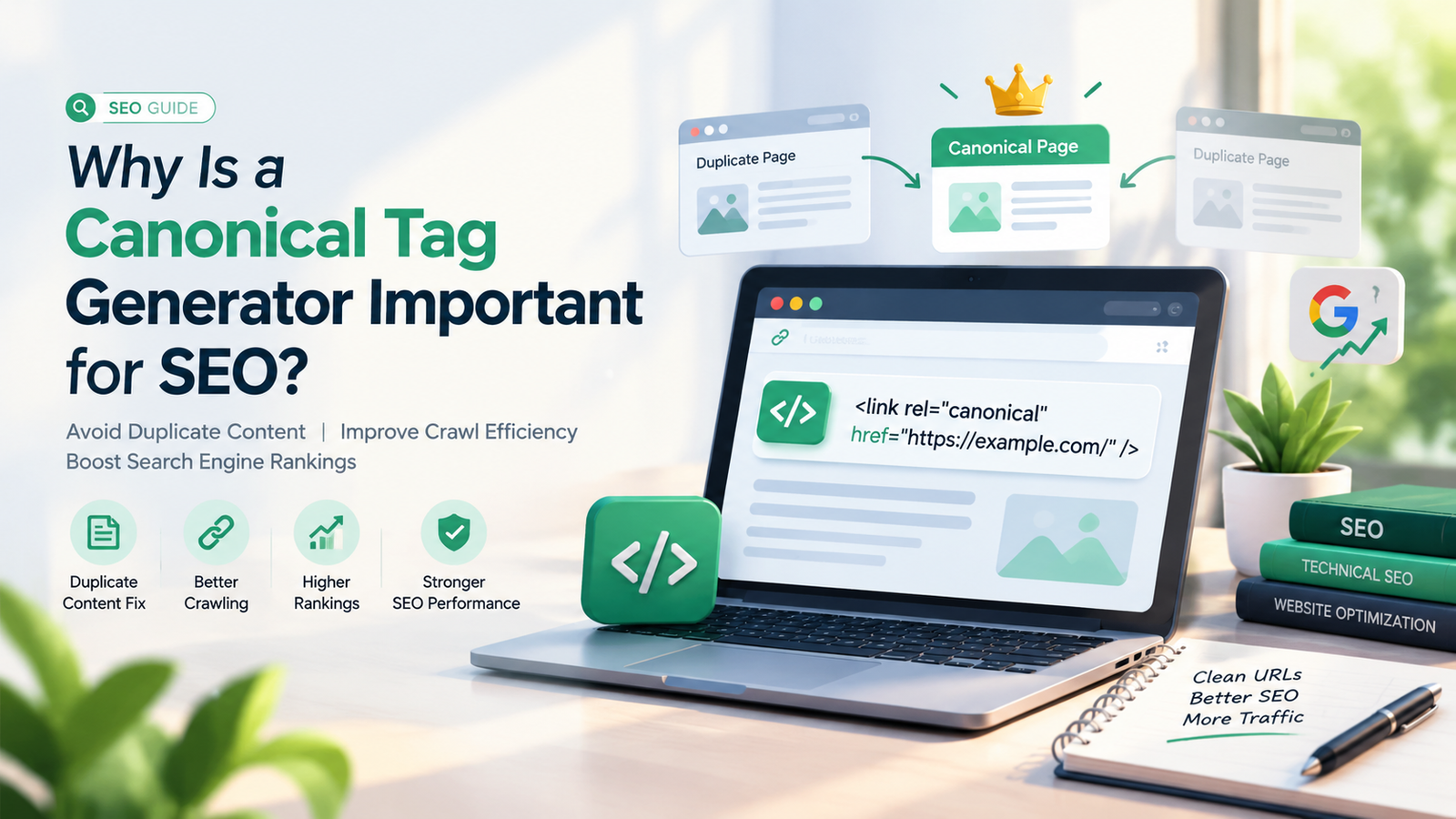
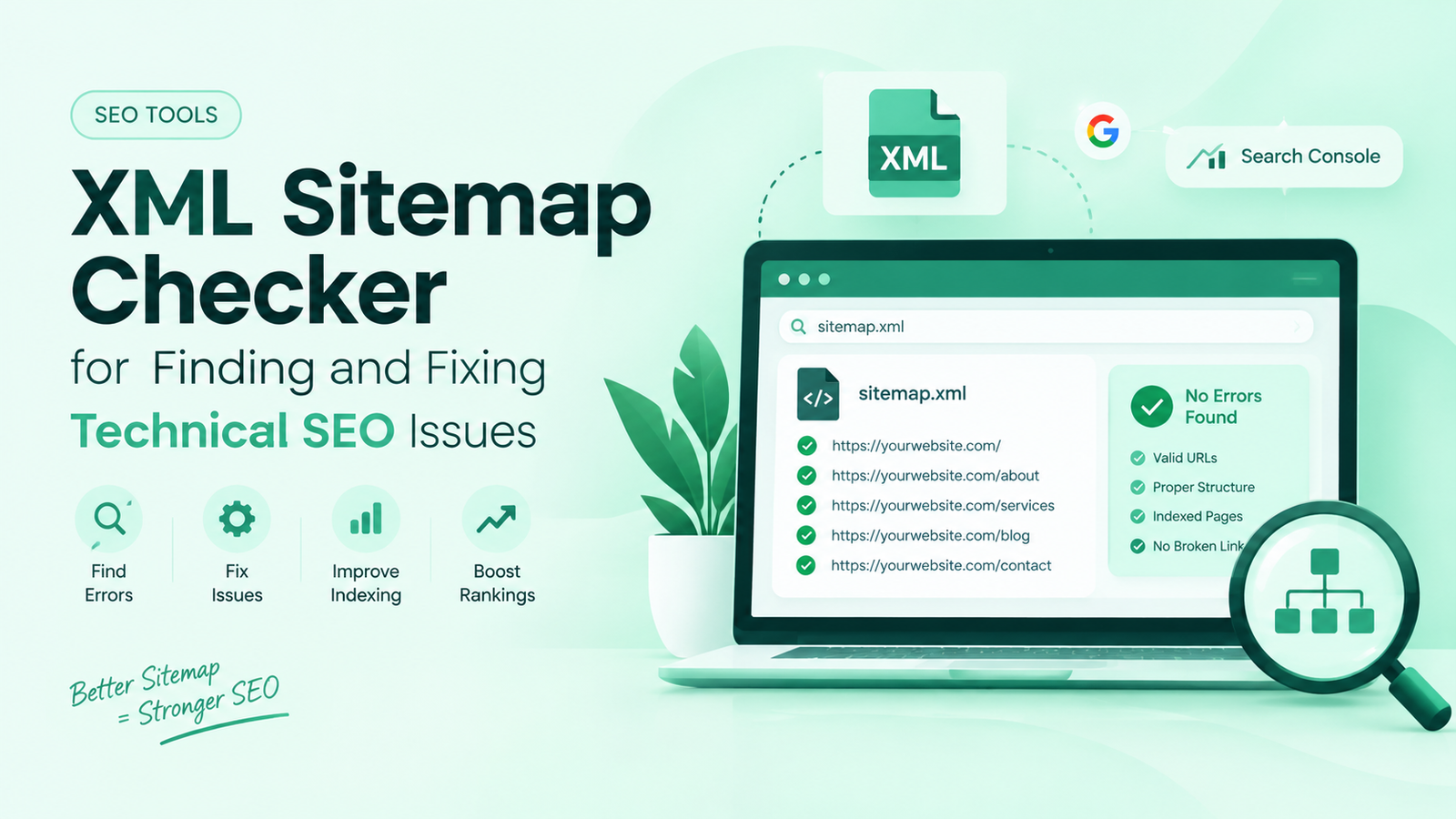
Schema markup generators can complement other technical SEO tools, including XML sitemap checkers, canonical tag generators, meta tag analyzers, and website audit tools.
Together, these tools can help website owners identify implementation issues, improve site organization, and maintain more consistent technical SEO practices.
Schema Markup Generator vs. Manual Schema Coding
Both automated generation and manual coding can be effective. The right approach depends on the website’s complexity, available technical resources, and the level of customization required.
A schema markup generator is often the better starting point for beginners, bloggers, small businesses, and marketers who need standard structured data without writing code from scratch. It can generate a basic template quickly and make the implementation process easier to follow.
Manual schema coding provides greater flexibility for complex websites, custom entities, interconnected data graphs, and advanced technical requirements. Developers can control how multiple entities relate to one another and build structured data that matches a specific website architecture.
However, manual implementation requires a solid understanding of the relevant vocabulary, syntax, and search engine guidelines. It also introduces the possibility of coding errors if the markup is not tested carefully.
For many websites, a practical approach is to generate the initial code with a schema markup generator, review the output manually, and validate it before publishing.
How to Use a Schema Markup Generator Step by Step
Using a schema markup generator is straightforward when the correct information is available.
Step 1: Choose the appropriate schema type. Identify whether the page represents an article, product, organization, local business, software application, or another entity.
Step 2: Enter the required information. Provide accurate details such as the page title, URL, author, image, publication date, product price, or business information, depending on the selected schema.
Step 3: Generate the JSON-LD code. Use the generator to convert the supplied information into structured data. Review all fields for errors, missing information, and irrelevant properties.
Step 4: Copy the generated code. Keep the code in a safe place and ensure that you understand which page it describes.
Step 5: Add the markup to the relevant page. Depending on your platform, this may involve a plugin, custom code field, theme integration, or developer assistance.
Step 6: Test the implementation. Run the page through the relevant validation tools and correct syntax or eligibility issues.
Step 7: Check the live page. Confirm that the published webpage contains the intended markup and that its information matches the visible content.
Step 8: Monitor performance. Use Google Search Console and other relevant SEO tools to review available enhancement reports and search performance over time.
Following these steps can help reduce common implementation mistakes and make structured data easier to maintain.
Best Practices for Schema Markup Implementation
Creating schema markup is not enough to ensure that it works correctly. Website owners should follow established best practices to maintain accurate, useful, and search-engine-friendly structured data.
Use Relevant Schema Types
Select a schema type that accurately represents the primary content of the page. Avoid adding unrelated markup simply because a generator offers that option.
Match Structured Data to Visible Content
Structured data should reflect information that users can access on the page. Avoid marking up hidden, misleading, or fabricated details.
Use Accurate Property Values
Check names, URLs, dates, prices, images, and other values carefully. If information changes, update the markup accordingly.
Avoid Duplicate or Conflicting Markup
Multiple plugins, templates, or scripts may generate overlapping structured data. Review the rendered page to identify unnecessary duplication and conflicting entity information.
Some overlapping markup can be valid, but entities should be consistent and clearly related.
Validate Before Publishing
Use the Schema Markup Validator to examine Schema.org syntax and vocabulary. Use Google’s Rich Results Test when checking eligibility for supported Google rich-result features.
Remember that a schema can be valid according to Schema.org without qualifying for a particular Google search feature.
Maintain Structured Data Over Time
Review schema markup after redesigns, CMS updates, URL changes, product updates, or changes to the visible content. Regular maintenance helps prevent outdated or inaccurate information from remaining on the website.
Follow Search Engine Guidelines
Do not use structured data to misrepresent the page, create fake reviews, or describe content that does not exist. Search engines may ignore noncompliant markup, and violations can affect eligibility for enhanced search features.
Common Schema Markup Mistakes to Avoid
Even with an automated tool, several implementation mistakes can reduce the usefulness of structured data.
One common problem is selecting the wrong schema type. For example, describing a general informational article as a product page creates unnecessary confusion and may make the markup inappropriate for the content.
Another mistake is leaving placeholder values in the generated code. Default author names, sample prices, generic URLs, and incomplete image links should be replaced with accurate information before publication.
Incorrect JSON-LD syntax is another potential issue. Missing commas, unclosed braces, and improperly formatted values can prevent search engines from processing the markup correctly.
Website owners may also expect schema markup to guarantee rich results or higher rankings. In reality, structured data supports content understanding and can enable certain enhanced presentations, but it does not guarantee either outcome.
Finally, some websites add the same schema repeatedly through multiple SEO plugins or custom scripts. This can produce redundant or inconsistent information. Reviewing the live page and coordinating schema settings across plugins can help prevent this issue.
How to Test Schema Markup
Testing is an essential part of the structured data process because generated code may contain incorrect values, unsupported properties, or implementation errors.
Google’s Rich Results Test helps website owners determine whether a page contains structured data eligible for supported rich-result features. It can identify relevant errors and warnings that may affect eligibility.
The Schema Markup Validator checks structured data against the Schema.org vocabulary. It is useful for examining general schema markup, including types and properties that are not supported as Google rich-result features.
Google Search Console provides additional monitoring options. Depending on the schema type and website, reports may show valid items, errors, warnings, and other enhancement information. Search Console performance reports can also help website owners monitor search visibility and clicks, although changes cannot automatically be attributed to schema markup alone.
Testing should ideally include both the generated code and the published webpage. This helps confirm that the markup is syntactically correct and actually present on the live page.

Is a Schema Markup Generator Necessary for Every Website?
A schema markup generator is not essential for every website, but it can be valuable for sites that want to implement structured data efficiently.
A small blog may only need relevant article and website markup. An online store may benefit from product-related structured data, while a SaaS platform may need organization, software application, and webpage information where appropriate.
Websites with custom development requirements may prefer a manual or programmatic implementation. Others may use an SEO plugin that generates structured data automatically.
The most important consideration is not the number of schema types implemented but the accuracy, relevance, and quality of the structured data. A smaller set of correct schema markup is generally more useful than a large collection of irrelevant or misleading properties.
Frequently Asked Questions About Schema Markup Generators
What does a schema markup generator do?
A schema markup generator creates structured data code from information supplied by the user. It helps website owners describe content such as articles, products, businesses, and software applications in a format that search engines can interpret.
Is schema markup important for SEO?
Schema markup can support search engines’ understanding of webpage content and help eligible pages qualify for certain enhanced search presentations. It complements other SEO practices but does not guarantee higher rankings.
Is JSON-LD better than Microdata?
JSON-LD is generally the preferred format for Google structured data because it is easier to implement and maintain separately from much of the visible HTML. Microdata and RDFa are also structured data formats, but JSON-LD is often more convenient for modern websites.
Can beginners use a schema markup generator?
Yes. Many schema generators use simple forms that allow users to select a schema type and enter relevant details without writing code manually. Beginners should still review and test the resulting markup.
Does schema markup guarantee rich snippets?
No. Valid structured data can make a page eligible for certain rich results, but Google determines whether and when those presentations appear. Eligibility depends on supported schema types, page quality, content, and applicable guidelines.
How can I check whether my schema markup is working?
Use Google’s Rich Results Test for supported rich-result eligibility and the Schema Markup Validator for general Schema.org validation. Google Search Console can help monitor available structured data enhancement reports.
Can I use multiple schema types on one webpage?
Yes. A page may describe multiple related entities, such as an article and its publisher. The markup should accurately represent the page, maintain consistent entity relationships, and avoid unnecessary duplication.
Does schema markup help SaaS websites?
Schema markup can help SaaS websites describe their organization, articles, software applications, and other relevant entities. The exact benefits depend on the implementation, supported search features, and quality of the page content.
Conclusion
A Schema Markup Generator is a practical SEO tool that simplifies the process of creating structured data for websites. By converting relevant page information into formats such as JSON-LD, it helps website owners describe their content in a standardized, machine-readable way. Structured data can support search engines’ understanding of articles, products, organizations, software applications, and other entities while enabling eligible pages to qualify for certain enhanced search results. To achieve the best results, website owners should select appropriate schema types, use accurate information, match markup to visible content, avoid duplicate implementations, and validate the final code with reliable testing tools. Schema markup should be treated as part of a broader technical SEO strategy rather than a shortcut to higher rankings. When implemented correctly and maintained consistently, a schema markup generator can help bloggers, developers, SaaS companies, and digital marketers manage structured data more efficiently and build a clearer foundation for search engine understanding.




Leave a Reply