
For a B2B SaaS business, attracting the right audience through organic search remains among the most effective ways to build long-term visibility and generate qualified leads. By leveraging SEO Tools strategically, you can align content with user intent and improve resonance with your target buyers.
However, successful SEO requires more than publishing content and adding keywords to web pages. It calls for a disciplined approach that combines data-driven insights with ongoing optimization across site structure, metadata, and internal linking to sustain growth.
Businesses need accurate data to understand search demand, monitor rankings, analyze competitors, identify technical problems, and measure results. With reliable metrics and clear prioritization, teams can track progress over time and demonstrate how organic efforts translate into inbound interest and qualified leads.
This is where SEO Tools for B2B SaaS become essential.
Moreover, the right tools can help SaaS marketing teams make informed decisions.
They can discover valuable opportunities, improve website performance, and create content that matches what potential customers are actually searching for.
Instead of relying on assumptions, B2B SaaS businesses can use SEO platforms to understand their current performance and determine where improvements are needed. From keyword research and competitor analysis to technical audits and backlink monitoring, different tools support different parts of an SEO strategy.
This guide explores the essential SEO tools every B2B SaaS business should know and explains how they can contribute to sustainable organic growth.

Why Are SEO Tools Important for B2B SaaS Businesses?
B2B SaaS SEO can be challenging because companies often target specialized audiences and competitive commercial keywords. The buying journey can also involve multiple stages, from initial research and problem awareness to product comparison and final purchase decisions.
SEO tools make this process easier by turning website and search data into useful insights.
For example, an SEO platform can help a SaaS company discover which keywords potential customers use, which competitors currently rank for those searches, which pages attract organic traffic, and where technical issues may be limiting visibility.
Effective tools can help businesses:
- Discover relevant keywords and search opportunities
- Analyze competing SaaS websites
- Monitor organic keyword rankings
- Identify technical SEO problems
- Evaluate backlinks and referring domains
- Optimize existing website content
- Measure clicks and search visibility
- Understand visitor behavior
- Track SEO progress over time
The goal is not simply to collect more data. The real value comes from using that information to make better SEO decisions.
1. Google Search Console for Organic Search Performance
Google Search Console is one of the most important platforms for any B2B SaaS website because it provides information directly related to a site’s presence in Google Search.
Businesses can use it to monitor impressions, clicks, click-through rates, average search positions, indexing status, and individual page performance.
For a SaaS company, this information can reveal which product pages, service pages, landing pages, and blog articles are already gaining search visibility.
Search Console can also help identify queries for which a page receives many impressions but relatively few clicks. These pages may benefit from improved titles, descriptions, or better alignment with search intent.
It is also useful for identifying indexing and crawling issues that could prevent important SaaS pages from appearing correctly in search results.
2. Google Analytics for Website and User Insights
Ranking for keywords is valuable, but SaaS businesses also need to understand what visitors do after reaching their websites.
Google Analytics can help teams analyze website traffic and user interactions. Businesses can examine traffic acquisition, landing-page performance, user journeys, and important conversion-related actions.
This is particularly valuable for B2B SaaS companies because organic traffic alone does not tell the complete story.
A blog article may generate thousands of visits without contributing meaningfully to business goals, while another page with lower traffic might attract visitors who are more interested in requesting a demo, starting a trial, or exploring a product.
Combining analytics data with SEO performance allows SaaS businesses to focus on organic traffic that supports meaningful business outcomes.
3. Semrush for Keyword and Competitor Research
Semrush is a comprehensive SEO platform that can support several areas of a B2B SaaS strategy.
One of its strongest applications is keyword research. SaaS businesses can use keyword data to discover topics related to customer problems, product categories, software comparisons, industry questions, and commercial searches.
Competitor research is another valuable use.
By studying competing domains, businesses can identify keywords competitors rank for, pages that attract search visibility, backlink opportunities, and potential content gaps.
For example, if several competitors receive organic visibility from a particular SaaS topic that your website has not covered, that topic may represent an opportunity worth investigating.
However, keyword volume should not be the only consideration. Search intent, competition, relevance, and potential business value should also influence keyword selection.
4. Ahrefs for Backlink and Competitive Analysis
Backlinks remain an important part of SEO, especially in competitive B2B industries.
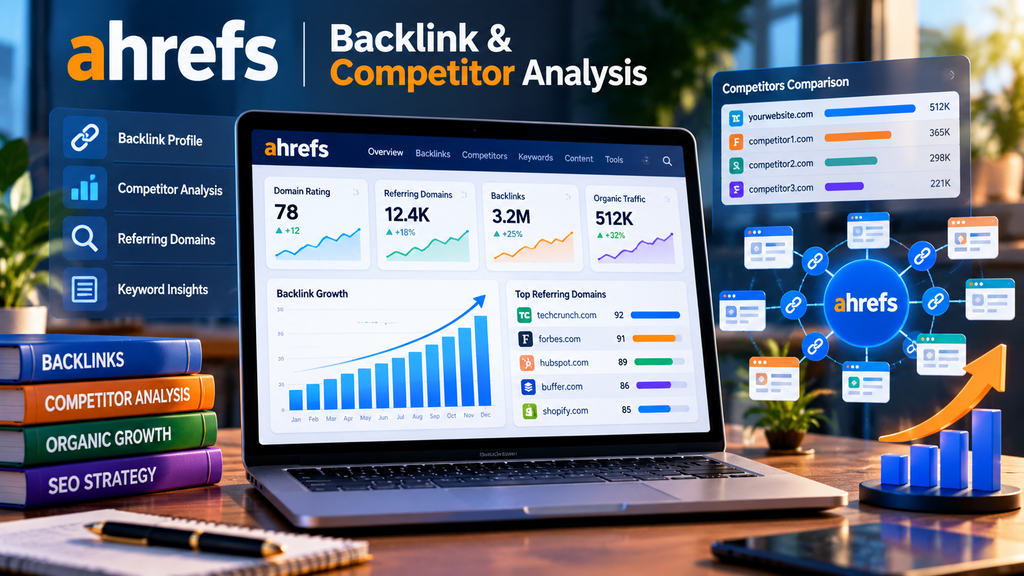
Ahrefs is widely used for backlink research, keyword analysis, competitor research, and content exploration.
A B2B SaaS company can use backlink analysis to understand which websites link to competitors and which content assets naturally attract references from other sites.
This information can help marketers develop stronger link-building campaigns.
For instance, original research, industry statistics, detailed guides, free tools, templates, and useful resources may attract links when they provide genuine value.
Ahrefs can also help businesses identify lost links, referring domains, competing pages, and potential content opportunities.
The objective should not be to acquire as many backlinks as possible. Relevance, credibility, context, and quality matter far more than raw link numbers.
5. Screaming Frog for Technical SEO Audits
Even excellent SaaS content can struggle if a website contains serious technical problems.
Screaming Frog SEO Spider is useful for crawling websites and identifying technical and on-page issues across multiple URLs.
It can help identify problems involving:
- Broken links
- Missing page titles
- Duplicate metadata
- Redirects
- Canonical elements
- Heading structures
- Crawlability
- Internal linking
- Indexability signals
This becomes particularly useful as a SaaS website grows.
A small website may initially contain only a few product and blog pages. Over time, however, it can expand into hundreds or thousands of URLs involving integrations, features, use cases, resources, documentation, and articles.
Regular technical audits can help ensure that this growth does not create unnecessary SEO problems.
6. PageSpeed Insights for Website Performance
Website performance can influence both user experience and search performance.
Google PageSpeed Insights helps website owners evaluate page performance and provides information related to Core Web Vitals and other performance factors.
For B2B SaaS websites, speed is especially important because pages may contain product screenshots, animations, videos, interactive elements, scripts, and third-party integrations.
These elements can improve a website experience when implemented properly, but they can also make pages unnecessarily heavy.
PageSpeed Insights can highlight areas that developers and marketers should investigate, helping teams build pages that are visually engaging without sacrificing performance.
7. Yoast SEO or Rank Math for WordPress Optimization
Many B2B SaaS businesses use WordPress for their blogs or marketing websites.
Plugins such as Yoast SEO and Rank Math can make basic on-page optimization easier by providing controls and guidance for SEO titles, meta descriptions, canonical URLs, XML sitemaps, schema-related settings, and other important elements.
These plugins are especially helpful for maintaining consistency across large content libraries.
However, optimization scores should not become the primary goal.
A page does not automatically become valuable simply because an SEO plugin displays a positive score. Content still needs to satisfy search intent, demonstrate expertise, provide useful information, and deliver a strong user experience.
SEO plugins should therefore support an optimization strategy rather than replace one.
8. Surfer SEO for Content Optimization
Content optimization platforms such as Surfer SEO can help teams analyze pages and identify terms, topics, structural patterns, and content elements associated with a target search query.
For B2B SaaS businesses, this can be useful when creating detailed guides around competitive topics.
However, recommendations from content optimization software should be treated as guidance rather than strict rules.
Adding every suggested phrase simply to increase a content score can reduce readability and make an article sound unnatural.
The strongest approach combines data from optimization tools with subject expertise, original insights, clear writing, and genuine usefulness.
9. Google Keyword Planner for Keyword Discovery
Google Keyword Planner is another useful resource for researching keyword ideas.
Although it is primarily designed for advertising, its keyword information can help SaaS marketers explore search themes and discover related terminology.
It can be particularly useful during the early stages of topic research.
For example, a SaaS company offering project-management software could investigate searches surrounding workflow automation, project tracking, team collaboration, reporting, and productivity.
These ideas can then be evaluated using additional SEO tools to determine their organic search potential.
10. Looker Studio for SEO Reporting
SEO strategies generate data from several different sources. This can make reporting complicated, particularly when stakeholders need a clear overview rather than dozens of separate reports.
Looker Studio can help businesses create dashboards that organize important marketing and SEO information in a more understandable format.
A B2B SaaS SEO dashboard might track metrics such as organic clicks, impressions, landing-page performance, conversions, keyword trends, and traffic changes.
Clear reporting makes it easier to connect SEO activity with broader marketing objectives.
How to Choose the Right SEO Tools for B2B SaaS
Not every SaaS company needs every SEO platform.
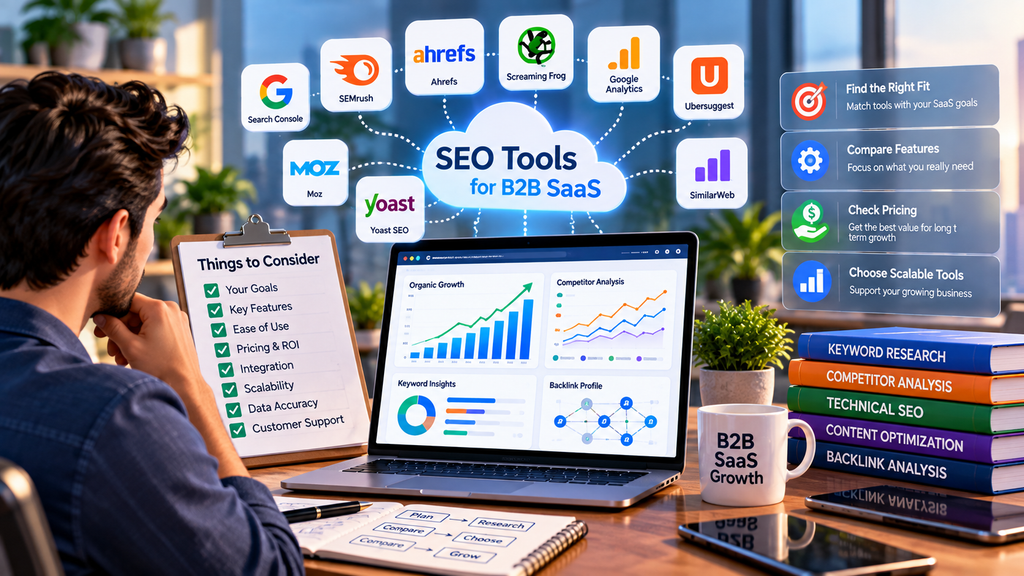
The right combination depends on factors such as website size, budget, marketing goals, competition, internal expertise, and the complexity of the SEO strategy.
Smaller SaaS businesses can begin with essential platforms such as Google Search Console, Google Analytics, and PageSpeed Insights. As their strategy becomes more advanced, they can add specialized tools for competitor research, technical auditing, content optimization, and backlink analysis.
Before paying for a platform, ask what specific problem it will solve.
If several tools provide nearly identical functionality, maintaining subscriptions to all of them may create unnecessary costs and data overload.
A focused SEO toolkit is often more valuable than a large collection of platforms that the team rarely uses.
Build a Complete B2B SaaS SEO Toolkit
The best SEO tools for B2B SaaS businesses are those that turn information into practical improvements.
Keyword research platforms can uncover new opportunities. Competitive analysis tools can reveal gaps in an existing strategy. Technical crawlers can identify website problems, while analytics and search-performance platforms can show whether optimization efforts are producing meaningful results.
However, no SEO tool can replace a strong strategy.
Successful B2B SaaS SEO requires understanding the target audience, creating genuinely useful content, maintaining a technically healthy website, earning relevant authority, and continuously evaluating performance.
Start with tools that address your most important SEO challenges, learn how to interpret their data correctly, and gradually build a toolkit that supports your long-term organic growth.
When technology, expertise, and a customer-focused strategy work together, SEO tools become more than reporting platforms—they become valuable resources for improving search visibility, attracting qualified audiences, and supporting sustainable B2B SaaS growth.