
Choosing the right SEO tools for a SaaS website can make a major difference in how effectively your business attracts organic traffic, discovers valuable keywords, monitors competitors, and improves search visibility. SaaS companies operate in highly competitive digital markets where potential customers often research multiple solutions before signing up. A strong SEO tool set can help your team understand this search behavior and turn useful data into a sustainable optimization strategy.
However, using more SEO software does not automatically produce better results. Each platform is designed for particular tasks, such as keyword research, technical auditing, backlink analysis, content optimization, rank tracking, or performance monitoring. The goal is therefore not to collect as many tools as possible. It is to select tools that match your SaaS website’s objectives, resources, and current SEO challenges.
This guide explains how to choose the right SEO tools for a SaaS website, what features to evaluate, and how to build an efficient SEO technology stack without unnecessary complexity.
Why SEO Tools Matter for SaaS Websites
SaaS websites usually depend heavily on digital acquisition. Unlike businesses that can rely primarily on physical locations or traditional advertising, SaaS companies often need their websites to educate prospects, generate sign-ups, capture leads, and support long-term customer acquisition.
SEO tools provide the data needed to understand how a website performs in organic search.
A suitable tool set can help a SaaS team:
- Discover relevant keywords and search topics
- Analyze organic competitors
- Identify technical SEO problems
- Monitor keyword rankings
- Evaluate backlinks
- Optimize existing content
- Discover new content opportunities
- Monitor organic traffic and conversions
- Improve website performance
- Measure SEO progress over time
Without reliable data, SEO decisions can become based on assumptions rather than measurable opportunities.
1. Define Your SaaS SEO Goals First
Before purchasing an SEO platform, determine exactly what you expect the software to accomplish.
Different SaaS businesses can have very different priorities. A recently launched website may need keyword research and technical auditing, while an established SaaS brand may be more interested in competitor research, content gaps, backlinks, and large-scale rank tracking.
Your objectives might include increasing organic traffic, generating qualified leads, improving rankings for commercial keywords, growing product-page visibility, creating informational content, or entering new markets.
For example, if your primary problem is discovering keywords, investing heavily in an advanced backlink platform may not be the best first step.
Start with the problem and then select the tool.
2. Look for Strong Keyword Research Features
Keyword research is one of the foundations of SaaS SEO.
Your SEO tool should help you identify queries that potential customers use during different stages of their journey. This includes informational searches as well as commercial and product-focused keywords.
Useful keyword research features include:
- Search volume estimates
- Keyword difficulty metrics
- Related keyword suggestions
- Search intent information
- Keyword variations
- SERP analysis
- Competitor keyword discovery
- Geographic keyword data
A SaaS company should not focus exclusively on high-volume keywords. Highly specific terms with lower search volumes can sometimes represent visitors who are much closer to evaluating a solution.
For example, keywords involving phrases such as software, platform, tools, alternatives, pricing, comparison, or for [industry] can indicate strong commercial relevance depending on the product.
3. Evaluate Competitor Analysis Capabilities
Competitive research can reveal opportunities that would otherwise take considerable time to discover.
Good SaaS SEO tools should allow you to examine which keywords competitors rank for, their strongest pages, backlink sources, and potential content gaps.
Competitor analysis can answer questions such as:
Where does your website have an opportunity to create something more useful?
The purpose is not to duplicate competitors. Instead, use competitive information to understand the search landscape and identify areas where your SaaS company can provide greater value.
4. Check Technical SEO Audit Features
Even excellent content can struggle when a website has significant technical problems.
For SaaS businesses, technical SEO becomes particularly important as websites expand. Product pages, integration pages, feature pages, comparison pages, help documentation, landing pages, and blog posts can create hundreds or thousands of URLs.
A capable technical SEO tool should detect issues involving:
- Broken internal or external links
- Redirect problems
- Duplicate content
- Missing metadata
- Canonicalization
- Crawl ability
- Indexability
- XML sitemaps
- Internal linking
- Page performance
- Mobile usability
Technical auditing allows teams to discover problems before they affect large sections of the website.
5. Consider Content Optimization Features
Modern SaaS SEO requires more than simply placing a target keyword several times within an article.
Your content should satisfy search intent while clearly answering the questions users are trying to solve.
Content-focused SEO software can help identify related topics, semantic terms, competing content, missing subtopics, heading opportunities, and content gaps.
However, optimization scores should be treated as guidance rather than strict writing rules.
A page created primarily to satisfy a software-generated score can become repetitive or unnatural. The priority should remain creating accurate, useful, well-organized information for readers.
Use SEO tools to support good content—not replace good writing.
6. Check Rank Tracking Capabilities
Once your SaaS website begins targeting specific keywords, you need a way to monitor whether your visibility is improving.
Rank tracking software allows you to follow selected keywords over time.
Look for features such as:
- Desktop and mobile tracking
- Country or location tracking
- Ranking history
- Competitor tracking
- SERP feature monitoring
- Keyword grouping
- Visibility trends
Instead of checking individual keywords every day, analyze broader patterns.
For example, grouping keywords by product features, integrations, industries, informational topics, and commercial pages can make performance data much easier to interpret.
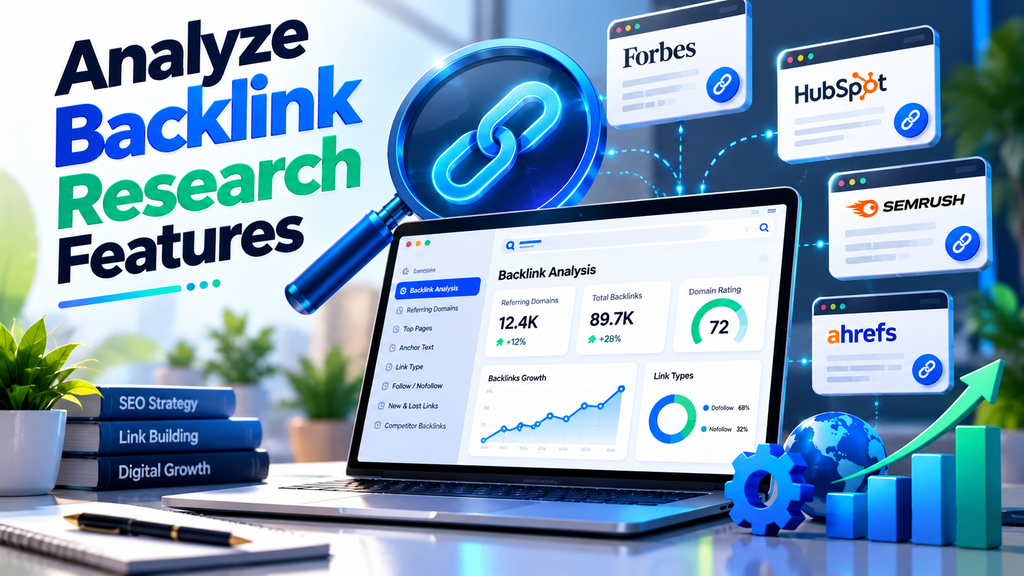
7. Analyze Backlink Research Features
Backlinks remain useful for understanding a website’s authority, online mentions, and competitive position.
A backlink analysis platform can help your SaaS team examine:
- Referring domains
- New backlinks
- Lost backlinks
- Competitor links
- Anchor text
- Linked pages
- Potential link opportunities
This information is especially valuable when creating original research, industry resources, free tools, statistics pages, templates, or other assets that can naturally earn references from external websites.
Backlink data can also help identify which types of content within your industry tend to attract links.
8. Prioritize Accurate Reporting and Analytics
SEO traffic alone does not guarantee business growth.
A SaaS website should connect organic visibility with meaningful actions such as free trials, demo requests, registrations, contact submissions, or other relevant conversions.
For that reason, your SEO stack should work alongside analytics and search-performance data.
Useful reporting should help you understand the relationship between:
Search visibility → Organic traffic → Engagement → Conversions
This makes it easier to distinguish pages that merely receive visits from pages that contribute to actual business objectives.
9. Consider Ease of Use
An SEO platform can offer hundreds of features and still provide little value if your team cannot use it efficiently.
Before selecting a platform, consider its learning curve.
A smaller SaaS team may benefit more from an intuitive platform with strong core features than from an enterprise-level system containing functionality they rarely use.
Look for a clear dashboard, understandable reports, simple exports, useful filters, and straightforward project management.
The best tool is not necessarily the one with the largest feature list. It is the one your team can consistently use to make better SEO decisions.
10. Compare Pricing With Actual Requirements
SEO platforms can become expensive, particularly when multiple subscriptions are combined.
Before purchasing a paid plan, determine which features are genuinely necessary.
Consider:
- Number of websites supported
- Number of tracked keywords
- Monthly reports
- Crawl limits
- User seats
- Keyword research limits
- Historical data
- Export limits
- API availability
Avoid paying for enterprise-level capacity when your website only requires a fraction of it.
For a growing SaaS business, it can be more efficient to begin with essential tools and expand the stack as organic traffic, content production, and reporting requirements increase.
11. Check Integration Capabilities
SEO does not operate independently from the rest of digital marketing.
Your chosen tools may need to work with analytics platforms, reporting systems, content workflows, spreadsheets, dashboards, or other marketing technologies.
Good integrations reduce manual work and allow teams to combine SEO information with broader marketing data.
This becomes increasingly important as a SaaS company grows and multiple people become involved in SEO, content, development, and reporting.
12. Avoid Using Too Many SEO Tools
One of the most common mistakes is building an unnecessarily complicated SEO stack.
Many platforms provide overlapping features. For example, several tools may all offer keyword research, rank tracking, site auditing, and competitor analysis.
Paying for multiple platforms that produce similar information can increase costs without significantly improving decisions.
Instead, build a focused stack around essential functions:
Research → Technical SEO → Content → Measurement
Add specialized tools only when there is a clear requirement that your existing software cannot address.
Free vs Paid SEO Tools for SaaS Websites
Both free and paid solutions can play valuable roles.
Free tools are often sufficient for fundamental search-performance monitoring, analytics, basic technical checks, and early-stage research.
Paid SEO platforms generally become more useful when a company requires extensive competitor intelligence, larger keyword databases, historical information, advanced backlink research, or scalable rank tracking.
A new SaaS website does not necessarily need an expensive SEO stack immediately.
Start with essential capabilities and upgrade when additional data can support better decisions.
How to Build an Effective SaaS SEO Tool Stack
Instead of looking for one platform that performs every possible SEO task, think about your technology as a small system.
A practical stack can include a tool for search-performance monitoring, another for analytics, a research platform for keywords and competitors, and a crawler or auditing solution for technical SEO.
As the business grows, specialized content, backlink, reporting, or automation platforms can be added.
This approach keeps costs manageable while ensuring every tool serves a specific purpose.
Mistakes to Avoid When Choosing SaaS SEO Tools
The first mistake is choosing software simply because it is popular. A widely used platform may still be unnecessary for your particular strategy.
Another mistake is relying on a single proprietary metric. Metrics such as keyword difficulty or authority scores can be useful for comparison, but different platforms calculate them differently.
Teams should also avoid collecting large amounts of SEO data without taking action.
Reports only become valuable when they lead to decisions such as improving a page, fixing technical issues, creating new content, strengthening internal links, or investigating a new keyword opportunity.
Finally, do not automate every SEO decision. Software can process large datasets efficiently, but human judgment remains important for understanding audiences, product positioning, search intent, and content quality.
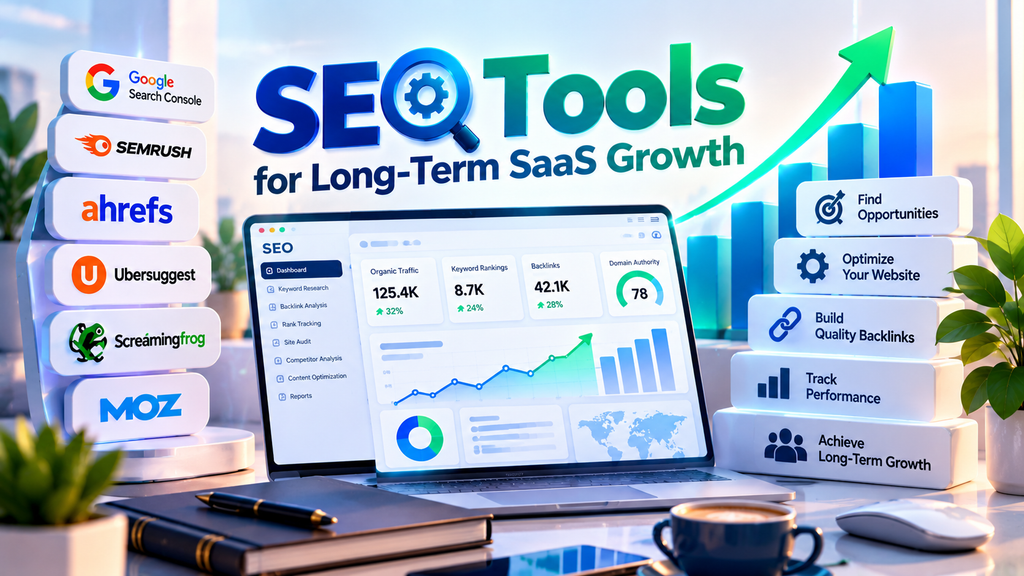
How to Choose the Right SEO Tools for Long-Term SaaS Growth
The right SEO tools should support your strategy as your SaaS website expands.
Begin by identifying your most important SEO challenges. Then evaluate platforms according to data quality, functionality, usability, integrations, scalability, and cost.
A useful selection process is:
Identify your SEO problem → Determine required features → Compare suitable tools → Test the software → Measure its value → Expand only when necessary
This prevents unnecessary spending and keeps your SEO workflow focused on measurable improvements.
Final Thoughts
Choosing the right SEO tools for a SaaS website is not about finding one perfect platform or subscribing to every popular solution available.
It is about creating a practical system that provides the information your team needs to make better decisions.
Prioritize tools that help with keyword research, competitor analysis, technical SEO, content optimization, backlink research, rank tracking, and performance measurement according to your actual needs.
As your SaaS website grows, your SEO stack can evolve with it. Regularly review which tools are producing useful insights, eliminate unnecessary overlap, and invest in additional capabilities only when they contribute to your broader organic growth strategy.
A carefully selected SEO tool set can help turn SEO from a collection of disconnected tasks into a structured, measurable process for sustainable SaaS growth.
Frequently Asked Questions
What are SEO tools for SaaS websites?
SEO tools are software platforms that help SaaS businesses research keywords, analyze competitors, identify technical problems, monitor backlinks, track rankings, optimize content, and measure organic search performance.
How do I choose the best SEO tool for my SaaS website?
Start by identifying your main SEO objective. Compare tools according to their features, data quality, ease of use, pricing, integrations, reporting capabilities, and ability to scale with your website.
Do SaaS websites need paid SEO tools?
Not always. New SaaS websites can perform many essential tasks with free solutions. Paid platforms become more useful when advanced keyword research, competitor intelligence, backlink analysis, historical data, or large-scale tracking is required.
How many SEO tools should a SaaS business use?
There is no ideal number. A SaaS business should use enough tools to cover its essential SEO requirements without paying for unnecessary overlapping features.
What features are most important in a SaaS SEO tool?
Important features can include keyword research, competitor analysis, technical auditing, backlink analysis, rank tracking, content research, reporting, and integration capabilities.
Can SEO tools improve SaaS website rankings?
SEO tools do not automatically improve rankings. They provide data and insights that can help teams identify opportunities and problems. Results depend on how effectively those insights are turned into technical improvements, useful content, and a broader SEO strategy.